

Table of Contents
- The Labor Behind Handcrafted Bags Costs More Than Mass Production
- Material Quality: Why Premium Hides and Yarn Justify the Price
- How to Identify High-Quality Handmade Bags
- Durability and Longevity: Cost-Per-Wear Analysis
- Benefits of Buying Handmade Crochet Bags
- The Value of Artisan Craftsmanship and Ethical Manufacturing
- Conclusion: Understanding What You're Really Paying For
- Frequently Asked Questions
Last Updated: September 20, 2026
The Labor Behind Handcrafted Bags Costs More Than Mass Production
Hand-stitching a single bag takes hours of focused work. When you're paying for handcrafted bags, you're paying for that time directly, which is why handcrafted bags cost more than factory assembly line production that spends minimal time on any one piece.
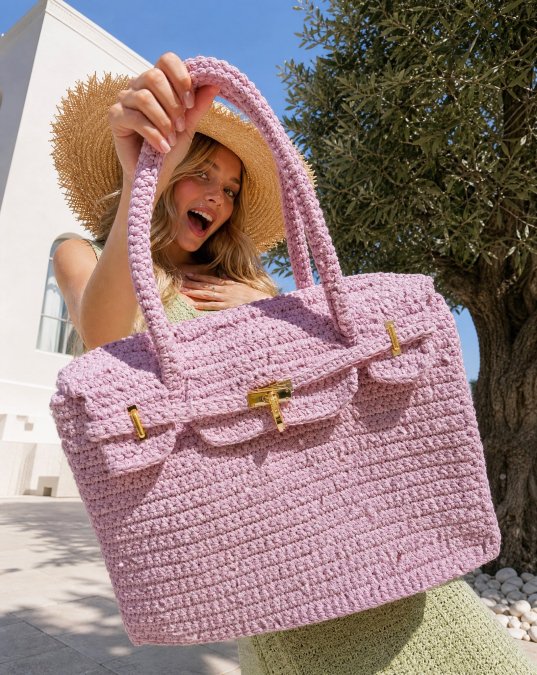
Mass-produced bags move through factories in minutes with workers performing repetitive tasks; overhead splits across thousands of units. Handcrafted bags receive individual attention from start to finish, with the artisan responsible for quality and every detail. This concentrates manufacturing overhead, rent, utilities, equipment, on fewer items. A maker producing 50 bags monthly carries the same fixed costs as someone producing 500, so that burden falls on each individual piece.
Material Quality: Why Premium Hides and Yarn Justify the Price
Handcrafted bags typically use materials that mass-market production avoids. Full-grain leather, vegetable-tanned hides, and luxury yarns cost significantly more than synthetic alternatives or lower-grade materials.
Leather and Tanning Methods
Full-grain leather retains the hide's natural surface, including its character marks. Tanneries that use vegetable-tanning methods take months instead of weeks, and the process is far more expensive. These materials age beautifully and develop a patina over years of wear. A mass-produced bag uses corrected grain leather or synthetic materials that look uniform but won't improve with time.
Vegetable tanning soaks hides in tannin-rich solutions for months, requiring careful monitoring. Chrome tanning, used in mass production, completes in days using chemical accelerators at a fraction of the cost, a $15-$40 difference per hide depending on size and quality grade.
Yarn and Textile Selection
Mali Bags uses 100% polyester yarn selected for durability and color vibrancy.
Hardware and Component Sourcing: The Hidden Cost Multiplier
Hardware is where material quality creates the largest price gap between handcrafted and mass-produced bags. This is rarely discussed in depth, but it's a critical cost driver.
Handcrafted bags feature solid brass, stainless steel, or gold-plated components: $8-$15 per zipper pull, $5-$12 per snap, $3-$8 per D-ring. These come from specialty suppliers maintaining quality standards in smaller batches.
Mass-produced bags use lightweight zinc alloys with thin plating (0.5-2 microns): zipper pulls cost $0.40-$0.80, snaps $0.15-$0.30. The plating wears through within months, exposing base metal that tarnishes or corrodes.
Solid brass forms a protective patina and doesn't corrode; stainless steel resists oxidation naturally. Plated zinc oxidizes rapidly once plating wears through. Handcrafted bags with solid brass hardware function identically after five years; mass-produced bags' hardware typically fails within 12-18 months.
A handcrafted bag using 3-5 quality zippers, 4-6 snaps, and 2-4 D-rings costs $50-$100 in hardware. The same bag with plated zinc costs $3-$8. This $42-$92 difference per unit explains much of the 80% discount on mass-produced bags.
Custom-cast hardware in brass or bronze costs $15-$40 per unit and becomes a signature element differentiating handcrafted bags from mass-produced alternatives.
How to Identify High-Quality Handmade Bags
Authentication starts with understanding what "handmade" actually means. True handcrafted bags show evidence of hand labor: visible stitching variations, hand-finished edges, and burnished details that machines can't replicate.
Quality indicators include: hand-stitching with slight variations and saddle stitching's signature double line (versus uniform machine stitching); hand-finished beveled edges (versus raw or glued); reinforced stitching or rivets for hardware (versus glue or staples); full linings with reinforced seams; and structured construction that holds shape when empty.
Ask makers directly about their process. Transparency about materials, labor, and construction is a strong signal; you should see evidence of hand labor, not just marketing claims.
Durability and Longevity: Cost-Per-Wear Analysis
This is where handcrafted bags reveal their true value, not through qualitative claims, but through mathematical comparison that most consumers never perform.
The Cost-Per-Wear Framework
Cost-per-wear divides purchase price by wears before failure, exposing the hidden cost of cheap bags.
Consider three scenarios:
Scenario 1: Handcrafted Leather Bag, $300, 5 years, 780 wears = $0.38 per wear. Scenario 2: Mass-Produced Bag, $80, 18 months, 234 wears = $0.34 per wear. The mass-produced bag appears cheaper until replacement cycles are considered.
Scenario 3: Five-Year Replacement Cycle, 10 bags at $50 each = $500 total, 390 wears = $1.28 per wear. The handcrafted bag at $0.38 per wear is 3.4 times cheaper than the fast-fashion cycle.
Why the Math Matters
Most consumers compare sticker price, not total cost of ownership. A $50 bag feels cheaper than a $300 bag until you've bought six of them, which is precisely why handcrafted bags cost more upfront but prove economical over time.
Handcrafted bags break this cycle because they're designed for longevity, not replacement. The maker's reputation depends on durability. A bag that fails after six months damages the artisan's business directly. A factory that produces 10,000 units per month can absorb a 5% failure rate as acceptable loss.
Durability Mechanisms: Why Handcrafted Bags Last
Durability comes from both materials and construction methods that mass production deliberately avoids because they're expensive.
Full-grain leather development: Full-grain leather develops a protective patina, a darkened, hardened surface layer that forms through oxidation and use. This patina actually strengthens the leather, making it more resistant to scratches and moisture. Corrected-grain leather (used in mass production) can't develop patina because the surface has been sanded and coated. It remains vulnerable to damage throughout its lifespan.
Vegetable-tanned leather aging: Vegetable-tanned hides become softer and more supple over time, not stiffer. The tannins continue to cure even after the bag is made, improving flexibility and comfort. Chrome-tanned leather (mass production standard) reaches its final state immediately and degrades from there.
Stitching integrity: Hand-stitching, particularly saddle stitching, uses two needles working from opposite ends of a single thread. If one stitch breaks, the thread doesn't unravel, the other needle's thread holds the seam. Machine stitching uses a single thread looped through both sides; one broken stitch can cause the entire seam to unravel. Handcrafted bags often use waxed thread, which resists fraying and adds tensile strength.
Hardware attachment: Quality bags use reinforced stitching (often 4-6 passes of thread) or rivets to secure hardware. Mass-produced bags glue or staple components. Glue fails when exposed to moisture or temperature changes. Staples bend and pull free. Stitched or riveted hardware remains secure indefinitely.
Internal structure: Handcrafted bags typically feature full linings with reinforced seams and sometimes internal stiffening (cardboard, plastic, or fabric stiffeners in the base). This structure prevents the bag from collapsing when empty and distributes stress evenly across seams. Mass-produced bags often have partial linings or no lining at all, meaning stress concentrates on seams, causing premature failure.
Real-World Durability: The Crochet Bag Example
A handcrafted crochet bag like Mali Bags' designs, made with premium polyester yarn and careful construction, withstands daily use for years. The structured design maintains its shape because the crochet tension is consistent and the yarn has sufficient stiffness.
Premium polyester yarn resists pilling (those fuzzy balls that form on fabric) because the fibers are tightly twisted and dyed before spinning.
Benefits of Buying Handmade Crochet Bags
Handmade crochet bags deliver advantages beyond durability. Each piece is genuinely unique. Two handcrafted bags are never identical, even when made by the same artisan using the same pattern.
This uniqueness matters for fashion-forward shoppers.
The Value of Artisan Craftsmanship and Ethical Manufacturing
Artisan craftsmanship represents a fundamentally different business model than mass production. Small makers typically pay fair wages, maintain reasonable working conditions, and build personal relationships with their customers.
Conclusion: Understanding What You're Really Paying For
When you buy a handcrafted bag, you're not paying for a markup on materials. You're paying for labor, skill, ethical manufacturing, durability, and uniqueness. You're paying for an item designed to last years, not months.
Frequently Asked Questions
What makes handcrafted bags more durable than mass-produced ones?
Handcrafted bags use superior materials like full-grain leather or premium polyester yarn, combined with hand-stitching and saddle stitching techniques that create stronger seams. Artisans perform quality assurance on every piece, catching flaws before the bag reaches you. Mass-produced bags rely on assembly line processes and cheaper materials that wear faster. Over time, a handcrafted bag's durability means lower cost-per-wear despite the higher upfront price.
How do I know if a handmade bag is actually handcrafted and not mass-produced?
Authentic handmade bags show hand-finished edges, visible hand-stitching or saddle stitching variations, and unique imperfections that prove individual craftsmanship. Check for consistent quality assurance markers like even burnishing, secure hardware attachment, and carefully finished seams. Ask makers about their process and supply chain transparency. Mali Bags crochet pieces, for example, feature individually hand-crocheted designs where each flower or scale is crafted by hand, making slight variations proof of authenticity.
Why is the cost-per-wear lower for handcrafted bags than designer alternatives?
Handcrafted bags often cost less upfront than luxury designer bags while offering comparable durability. A handcrafted crochet bag priced at £150-£250 can last 5-10 years with proper care, bringing the cost-per-wear to just £0.04-£0.17 per use. Many luxury designer bags cost 3-5 times more but don't last proportionally longer. Handcrafted pieces offer investment-piece value without the extreme markup, making them smarter for budget-conscious shoppers seeking quality.
What's the difference between handcrafted bags and fast fashion alternatives?
Handcrafted bags use premium materials, ethical labor practices, and slow manufacturing processes where each piece receives individual attention. Fast fashion relies on economies of scale, cheaper materials, and assembly line production to keep prices low. Handcrafted bags are built for longevity and sustainability, reducing waste. Fast fashion prioritizes speed and volume, resulting in pieces that fall apart quickly. Choosing handcrafted supports skilled artisans and sustainable fashion practices.