

Table of Contents
- Why Polyester Yarn Crochet Handbags Outlast Natural Fiber Bags
- Tensile Strength and Abrasion Resistance in Synthetic Fibers
- Moisture Resistance, Stretch Resistance and Shape Retention
- Polyester vs Cotton Yarn: A Durability Comparison
- How to Clean Polyester Crochet Bags Without Damaging the Stitch
- How to Keep Items from Falling Out of Crochet Bags
- Preventing Sagging in Crochet Handbags: Stitch and Hardware Tips
- Frequently Asked Questions
Last Updated: September 11, 2026
Why Polyester Yarn Crochet Handbags Outlast Natural Fiber Bags
The durability of polyester yarn crochet handbags comes down to one structural fact: synthetic fibers resist the stretching, moisture damage, and abrasion that break down natural yarns over months of daily use. At Mali Bags, our entire collection is built on 100% polyester yarn for exactly this reason. Where cotton crochet purses soften and sag, polyester holds its shape.
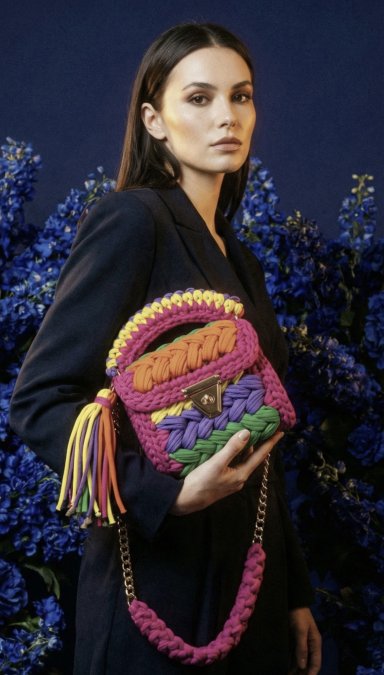
Most crochet bags fail for the same three reasons. The fiber absorbs water and swells. The stitch pattern stretches under load. The handle attachment tears free. Polyester yarn addresses the first problem at the fiber level, and smart construction handles the rest.
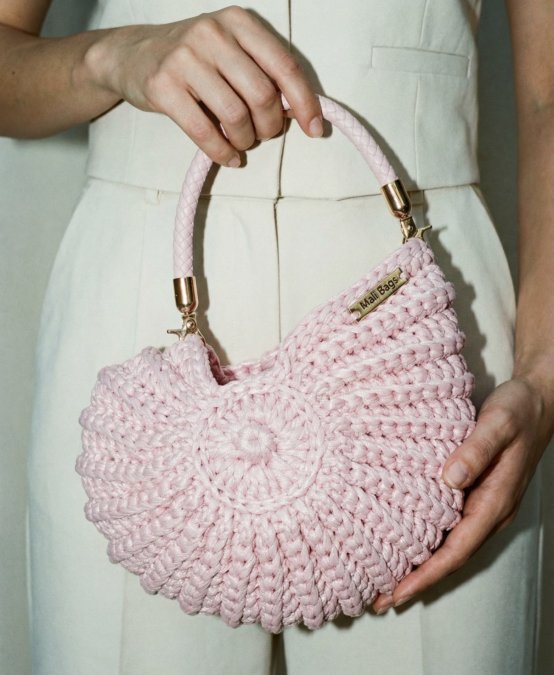
Here's what most guides get wrong: they treat yarn choice as a purely aesthetic decision. It isn't. Fiber composition determines how a bag ages. Cotton, wool, and bamboo all absorb moisture, which weakens the fiber structure and encourages sagging. Polyester is non-absorbent, so the yarn keeps its density and the bag keeps its shape.
Tensile Strength and Abrasion Resistance in Synthetic Fibers
Synthetic fibers win on tensile strength and abrasion resistance because their molecular structure resists both pulling force and surface friction. Polyester yarn stretches less under load than cotton, and it resists the rubbing that wears through softer fibers at contact points like handles and base corners (peer-reviewed research).

What does that mean in practice? A crochet bag carried daily rubs against your hip, car seats, and door frames. Abrasion resistance determines whether the yarn surface stays intact or starts to pill and fray. Polyester holds up better here than most natural alternatives.
Stitch definition matters too. Tight, consistent crochet tension creates a denser fabric that distributes weight more evenly. Loose tension lets individual stitches bear more load, which is where stretch and distortion begin.
- Pilling: synthetic fibers resist surface fuzzing better than short-staple natural yarns
- Fraying: polyester's continuous filament structure means fewer loose ends to break
- Colorfastness: polyester holds dye well, so vibrant colors fade more slowly with UV exposure
A common mistake is choosing a soft, loosely spun yarn for a bag that will carry weight. Soft yarn feels lovely in the hand but collapses under load. Material density beats softness for anything structural.
Moisture Resistance, Stretch Resistance and Shape Retention
Moisture resistance and stretch resistance are the two properties that most directly determine whether a crochet handbag keeps its shape. Polyester is non-absorbent, so rain, spills, and humidity don't penetrate the fiber and cause the swelling that leads to sagging.
Cotton tells the opposite story. It absorbs water readily, and a wet cotton bag becomes heavier and more prone to stretching. Once cotton fibers stretch under load, they rarely return to their original dimensions (PubMed). That's shrinkage and distortion working in reverse.
Polyester also brings wrinkle resistance and UV resistance. A bag left in a hot car or carried through a summer festival won't warp or fade the way natural fibers can. These thermal properties matter more than most buyers realize.
Polyester vs Cotton Yarn: A Durability Comparison
Polyester yarn outperforms cotton yarn on durability across every metric that matters for a handbag: moisture, stretch, abrasion, and shape retention. Cotton wins only on tactile feel and breathability, neither of which is critical for a bag.
Property |
Polyester Yarn |
Cotton Yarn |
|---|---|---|
Moisture resistance |
Non-absorbent, repels water |
Absorbs water, swells |
Stretch resistance |
High, returns to shape |
Low, stretches permanently |
Abrasion resistance |
High |
Moderate |
Shape retention |
Excellent |
Poor over time |
Colorfastness |
Strong, fade-resistant |
Fades with UV exposure |
Tactile feel |
Smooth, can be glossy |
Soft, natural |
The trade-off is real. Cotton feels more traditional and takes dye in softer, more muted tones. Mercerized cotton adds strength and a slight sheen, narrowing the gap. But for a bag that gets carried, polyester's structural advantage is hard to argue with.
This is where the "handmade vs mass-produced" question usually comes up. Fiber choice is one thing; construction is another. A well-made polyester bag with tight tension and reinforced handles will outlast a loosely made cotton one by a wide margin.
How to Clean Polyester Crochet Bags Without Damaging the Stitch
Cleaning a polyester crochet bag is straightforward because the fiber is non-absorbent and colorfast. The main risk isn't the yarn, it's the hardware and the stitch structure. Treat both gently and the bag will look new for years.
Follow this sequence:
- Empty and shake out loose debris from the lining and base
- Spot clean with a soft cloth dampened in cool water and a drop of mild soap
- Wipe along the stitch direction, not against it, to avoid pulling loops
- Rinse the cloth, not the bag, and wipe again to lift residue
- Blot dry with a clean towel and reshape the bag by hand
- Air dry away from direct heat, stuffed to hold its shape
Never machine wash a structured crochet bag (the FTC). The agitation pulls stitches and can distort the base. Never wring it out either; twisting stresses the yarn and the handle joins.
For deeper cleaning, hand wash in cool water with mild detergent, then press gently between towels. Polyester dries quickly because it doesn't hold water, so air drying takes hours, not days.
How to Keep Items from Falling Out of Crochet Bags
Keeping items secure inside a polyester crochet bag requires more than just adding a lining. The smooth, low-friction surface of polyester yarn means items slide more easily than they would against cotton, and the natural gaps between stitches, especially in open weaves, create escape routes for small objects. The solution combines three elements: a tight stitch fabric, a compatible lining, and hardware that doesn't abrade the yarn.
Start with stitch density. Single crochet produces a firm, nearly solid fabric with minimal gaps. Half-double or double crochet creates larger openings. If you're making or buying a bag meant for keys, coins, or cards, choose a pattern that uses single crochet throughout the body, or line it. A lining is non-negotiable for open-stitch bags. Cotton or polyester lining fabric works well; avoid slippery synthetics like nylon, which can cause items to shift. Sew the lining directly to the inside of the bag, leaving a small opening at the bottom for turning, then slip-stitch it closed.
Closures matter, but not all closures are compatible with polyester. Magnetic snaps require a metal backing plate or a reinforced fabric tab; without it, the snap can pull through the smooth yarn over time. Zippers distribute stress along a continuous track, making them the most secure option for daily use. A flap with a button or a turn-lock closure works well if the flap is lined and the button is sewn through a reinforced area. Avoid heavy metal clasps that concentrate weight on a few stitches, polyester's slick surface allows the yarn to slip, and the clasp can tear free.
For internal organization, a removable pouch or a sewn-in pocket panel keeps small items upright and reachable. A drawstring pouch made of the same polyester yarn can be crocheted tightly and attached to a D-ring inside the bag. This adds a layer of security without altering the bag's exterior. If you carry a phone, a dedicated slip pocket with a snap or Velcro closure prevents it from sliding out when the bag tips.
Finally, consider the bag's opening. A wide, gaping mouth is an open invitation for items to spill. A slightly tapered opening or a zippered top reduces this risk. If the bag has a flap, ensure it overlaps the body by at least two inches when closed. These small design choices separate a functional everyday bag from a decorative one.
Preventing Sagging in Crochet Handbags: Stitch and Hardware Tips
Sagging in a polyester crochet handbag is rarely caused by the yarn itself, polyester resists stretching far better than cotton or wool. The real culprits are stitch choice, tension consistency, and how the handle attaches to the body. Address these three, and the bag will hold its shape for years.
Stitch selection for structural integrity
Not all crochet stitches are created equal when it comes to load-bearing. The thermal stitch (also called the waistcoat stitch) creates a dense, knit-like fabric that resists stretching under weight. It's worked in single crochet but through the vertical bar of the stitch below, producing a tight, interlocking structure. For bags that carry heavier items, a water bottle, a tablet, a hardcover book, the thermal stitch is the gold standard. Single crochet is the next best option; it's firm and predictable. Half-double and double crochet are softer and more drapey, which feels nice but sags under load. Open, lacy stitches (shell, granny, mesh) are decorative only, they stretch and distort quickly.
Tension matters as much as stitch type. Consistent, tight tension distributes weight evenly across the fabric. Loose tension creates weak points where individual stitches bear more load, leading to localized stretching. If you crochet loosely, go down a hook size for the bag body. Many experienced makers use a hook one or two sizes smaller than the yarn label recommends for bags, then switch to the recommended size for any decorative elements.
Hardware compatibility and load distribution
Polyester yarn's smooth surface interacts differently with hardware than natural fibers. Metal D-rings, O-rings, and rectangular rings are ideal because they distribute force across a wide area. Attach them using a reinforced tab, a small rectangle of dense crochet fabric folded over the ring and sewn securely to the bag body. This spreads the load across multiple stitches rather than concentrating it on a single seam. Avoid attaching handles directly to the bag body with a simple whipstitch; that creates a stress point that will eventually tear.
Magnetic snaps and turn-locks need a backing plate or a fabric interfacing patch to prevent the metal from pulling through the slick polyester yarn. Zippers are generally safe because they're sewn along a continuous line, but use a heavy-duty zipper tape and sew through a lining for extra security. For shoulder straps, consider adjustable metal sliders, they allow you to tighten the strap and reduce swing, which minimizes stress on the attachment points.
Weight capacity and practical limits
A well-constructed polyester crochet bag with thermal stitch and reinforced hardware can comfortably carry 5-7 pounds (about 2-3 kg) of daily essentials: wallet, phone, keys, water bottle, small notebook. Beyond that, even the best construction will start to show strain. This isn't a tote for groceries or textbooks. Match the load to the bag's design, if you need to carry heavier items, choose a bag with a wider base, a flat bottom, and a strap that attaches at the sides rather than the top edge.
Finally, store your bag properly when not in use. Stuff it with tissue paper or a clean cloth to maintain its shape, and hang it by the handle rather than folding it. This prevents creases and slow sagging over time. With the right stitch and hardware, a polyester crochet bag can outlast a comparable cotton bag by years.
Frequently Asked Questions
Does polyester yarn stretch over time in crochet bags?
Polyester yarn has excellent stretch resistance, so it holds its shape far better than cotton or wool. The fiber's memory means that even with daily use, the bag won't sag or lose its structure. To keep it looking new, avoid hanging heavy items on the strap and store the bag stuffed with tissue paper when not in use. With proper care, a polyester crochet bag can maintain its original form for years.
How durable are polyester bags compared to cotton?
Polyester outperforms cotton in durability on almost every measure. It resists abrasion, moisture, and UV damage, and it won't shrink or stretch like cotton can. Cotton may feel softer initially, but it absorbs water, stains easily, and loses shape over time. Polyester yarn crochet handbags keep their color and structure through repeated use, making them a smarter choice for everyday wear.
Is polyester yarn water-resistant for handbags?
Yes, polyester is naturally non-absorbent, so it repels water and resists moisture-related damage. A light rain won't soak through, and spills bead up on the surface. This makes polyester crochet bags ideal for unpredictable weather. To clean, simply wipe with a damp cloth and mild soap, then air dry. Avoid machine washing, which can distort the crochet tension.
What type of yarn is best for crocheting handbags?
For handbags that need to hold their shape and withstand daily use, 100% polyester yarn is the top choice. It offers high tensile strength, resistance to stretching, and vibrant colorfastness. Unlike cotton, it won't sag or fade. When choosing a pattern, look for tight stitches like single crochet to enhance structural integrity. Mali Bags uses premium polyester yarn in all their designs, ensuring both beauty and longevity.