

Table of Contents
- Handcrafted vs Mass Produced Luxury Bags: What Sets Them Apart
- How to Identify High-Quality Crochet Bags
- Durability and Longevity: Handcrafted Bags Built to Last
- Benefits of Artisan-Made Handbags
- Cost-Efficiency vs Value for Money
- Where to Buy High Fashion Crochet Handbags Online
- Repairability and Circular Economy
- Frequently Asked Questions
Last Updated: October 2, 2026
Handcrafted vs Mass Produced Luxury Bags: What Sets Them Apart
The difference between a handcrafted luxury bag and a mass-produced one goes beyond price, it's about construction, materials, and longevity. At Mali Bags, we craft every piece by hand using premium 100% polyester yarn and intricate crochet techniques, making each bag genuinely unique. Understanding what makes handcrafted luxury bags worth the investment requires examining actual construction details.
A mass-produced luxury bag might use excellent materials and solid stitching, while a carelessly handcrafted bag could fall apart in months. The real question isn't handmade or mass-produced, it's whether the bag was made to last.
Mass production prioritizes consistency and volume through automation and standardized quality control. Handcrafted production prioritizes the individual piece, each bag receives attention, mistakes are caught and fixed, and the maker's reputation depends on every item.
This distinction matters because it affects durability, repairability, and whether your bag will develop character over time or just wear out.
How to Identify High-Quality Crochet Bags
Identifying a well-made handcrafted crochet bag means examining specific construction details that prove someone spent time on the piece.
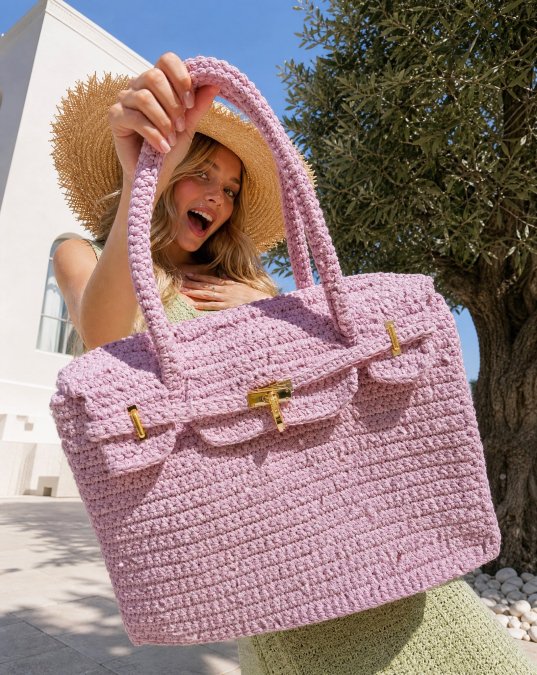
Start with the yarn: quality crochet has consistent weight throughout with no thin spots or fraying. Stitches should be tight and regular. Slight variations prove handmade work, but sloppy stitching is a red flag.
Stitching Techniques That Signal Quality
Saddle stitching, where thread passes through the same hole twice, is the gold standard for handcrafted bags. It distributes stress across multiple thread paths so a single broken thread won't unravel the seam. Machine lockstitch, common in mass production, is faster but a single broken thread can compromise the entire seam.
Check if seams are reinforced at stress points like handle attachments and run straight. Handcrafted bags often feature hand-finished edges, carefully sealed or bound rather than cut, which extends the bag's life.
Material and Yarn Construction
Full-grain crochet yarn, made from premium fibers without significant processing, holds its shape longer and develops a beautiful patina. Corrected grain or split yarn, processed to remove imperfections, looks uniform initially but can pill or lose shape with use.
Mali Bags uses 100% polyester yarn, which resists moisture and fading, requires no special care, and maintains texture through regular use, ideal for luxury handcrafted bags meant to be worn.
Thicker yarn and dense crochet (tight stitches close together) outperform loose, airy crochet in longevity. A delicate-looking bag can be structurally sound with quality yarn and tight stitching, but airy crochet with thin yarn is a warning sign.
Uneven dyeing in handcrafted pieces should be intentional, not accidental fading or color bleeding. Slight color variation is normal and fine; avoid bags where color looks unstable or might bleed onto clothes.
Durability and Longevity: Handcrafted Bags Built to Last
A well-built handcrafted bag will outlast a mass-produced bag because the maker's reputation depends on durability, while mass producers prioritize volume and cost efficiency.
Durability depends on material quality, stitching integrity, and hardware. Handcrafted bags typically use solid metal hardware the maker trusts, while mass producers sometimes use hardware designed to fail, encouraging repeat purchases.
Handle attachments are where bags fail first. Handcrafted bags reinforce handles with extra stitching to prevent tearing, while mass-produced bags often use adhesive or minimal stitching that fails faster.
Crochet bags specifically have an advantage in durability: if a single stitch breaks, the bag doesn't unravel like a knit would. The interconnected crochet structure means one damaged stitch affects only that small area. This is why crochet bags can be worn hard and still remain functional for years.
Benefits of Artisan-Made Handbags
Beyond durability, handcrafted bags offer benefits that mass production simply can't deliver. These are the reasons people choose handmade even when cheaper options exist.
Emotional Value and Personal Connection
A handcrafted bag carries a story. Someone made it. They chose the yarn color, decided on the stitch pattern, and spent hours bringing it to life. When you carry a handcrafted bag, you're carrying someone's skill and intentionality. This creates an emotional connection that a mass-produced item, no matter how expensive, rarely achieves.
This emotional value translates to how you treat the bag. You're more likely to care for something you feel connected to. You notice when it develops patina. You appreciate the small imperfections that prove it's handmade. You're less likely to discard it when a trend shifts.
For special occasions, weddings, anniversaries, milestone events, a handcrafted bag becomes a keepsake. The Valentina clutch from Mali Bags, with its hand-crocheted 3D floral design, isn't just an accessory for your wedding day. It's a piece of art you'll want to display and use for years after.

Sustainability and Ethical Production
Handcrafted production is inherently more sustainable than mass manufacturing. No factory energy consumption. No industrial waste. No supply chain complications spanning multiple continents. One artisan, one studio, one bag at a time.
Ethical labor is built into the model. When someone makes a bag by hand, they're paid for their skill and time. They're not competing with machines. They're not racing against quotas. They're not standing in a factory for twelve hours. This is why handcrafted bags often cost more, and why that premium reflects fair compensation.
Mass production can be ethical, but it requires deliberate commitment from the manufacturer. Many mass producers cut corners on labor to maximize profit. Handcrafted producers have fewer incentives to exploit workers because the economics don't work that way.
Environmental impact also favors handcrafted goods. A bag made to last ten years has lower environmental cost per year than a bag made to last two years, even if the first bag required more initial labor. The circular economy, the idea that products should be repairable and long-lasting, is native to handcrafted production.
Cost-Efficiency vs Value for Money
This is where the comparison gets real. A handcrafted crochet bag costs more upfront. Mali Bags' pieces range from the Valentina clutch at $150 to the Isla combo mermaid puff bag at $250. Mass-produced bags often cost less initially.

But cost-efficiency isn't the same as value for money. Cost-efficiency measures the lowest price. Value for money measures what you get for what you spend.
If you wear a bag for six months then discard it, the mass-produced option wins on cost-efficiency. If you wear a bag for five years, repair it once, and still love it, the handcrafted option wins on value for money. The math depends on your actual usage.
Consider cost-per-wear. If you spend $150 on a handcrafted bag and carry it 300 times over three years, you're paying 50 cents per wear. A $60 mass-produced bag that you carry 100 times before it falls apart costs 60 cents per wear. The handcrafted bag is cheaper per use.
Handcrafted bags also hold resale value better. A well-maintained Mali Bags piece can be resold or gifted, recovering some of the initial investment. Mass-produced bags depreciate rapidly because the market knows they won't last.
Where to Buy High Fashion Crochet Handbags Online
Finding genuine handcrafted crochet bags online requires knowing what to look for. Not all online retailers are equal.
What to Look for in Artisan Retailers
Legitimate artisan retailers provide transparency. They show close-up photos of stitching. They explain their materials and techniques. They often include the maker's name or story. They're willing to answer specific questions about construction.
Check the return policy. Artisans confident in their work offer reasonable returns. If a retailer refuses returns or has impossible conditions, that's a red flag.
Look for consistency across their collection. Do all their bags show the same level of craftsmanship? Do colors look natural or artificially saturated? Do product photos show the bag from multiple angles and in different lighting? Professional artisan retailers invest in photography because they're proud of their work.
Mali Bags displays each piece with detailed photography, material specifications, and construction notes.
Repairability and Circular Economy
This is where handcrafted bags shine and most mass-produced bags fail.
| Feature | Handcrafted Bags | Mass-Produced Bags |
|---|---|---|
| Stitching | Saddle stitching, hand-finished | Machine lockstitch, standardized |
| Material Quality | Premium yarn, consistent weight | Variable quality, cost-optimized |
| Durability | 5-10 years regular use | 1-3 years before visible wear |
| Repairability | Fully repairable by artisan | Often unrepairable by design |
| Environmental Impact | Low energy, ethical labor | Factory production, supply chain |
| Cost Per Wear (3-year use) | $0.50-0.75 | $0.60-1.00 |
| Uniqueness | Each piece is one-of-a-kind | Identical production runs |
| Emotional Value | High connection to maker | Minimal personal connection |
Frequently Asked Questions
How can you tell if a luxury bag is handcrafted or mass-produced?
Handcrafted bags show individual variations in stitching patterns and can have subtle imperfections that prove human construction. Mass-produced bags have uniform, machine-perfect stitching with consistent patterns and minimal imperfections. Ask the retailer for production details.
Do handcrafted bags last longer than mass-produced luxury bags?
Handcrafted bags are generally designed for longevity, prioritizing structural integrity and material quality. They are often made with premium yarns that resist wear. Many handmade bags are repairable, which is a key advantage for circular economy thinking.
Why are handcrafted luxury bags more expensive than mass-produced ones?
Handcrafted bags cost more due to labor-intensive production and premium material sourcing. They are designed for longevity. The price reflects value for money, as a handcrafted bag worn for years can offer better cost-per-use than a cheaper mass-produced alternative replaced annually.
What makes handcrafted crochet bags suitable for special occasions like weddings?
Handcrafted crochet bags offer unique artistry and are individually made, ensuring no two are identical, perfect for bridal events where you want a statement piece. The craftsmanship and attention to detail elevate bridal style with genuine luxury.